
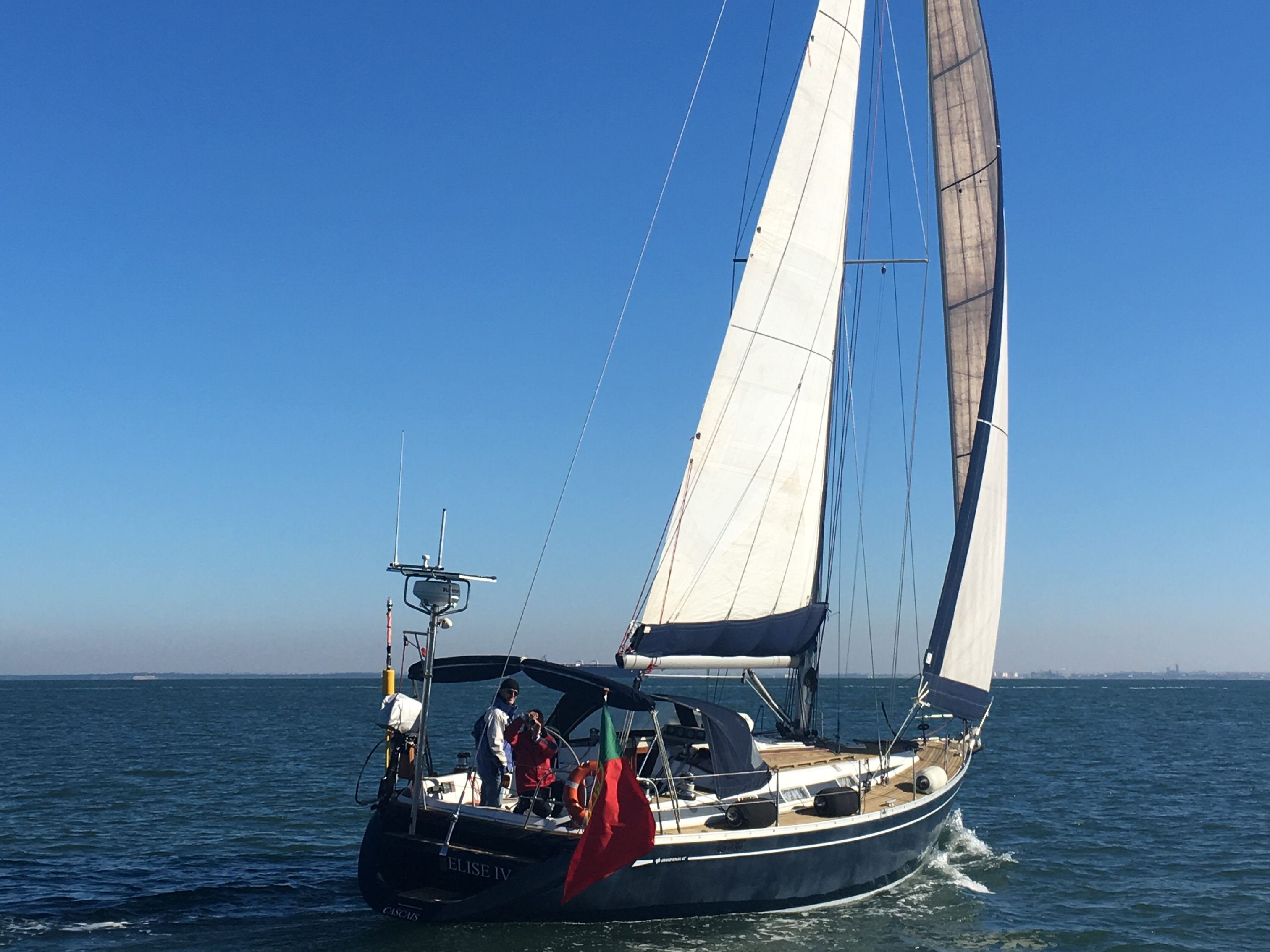
The International Bareboat Skipper course is a five day course. It is not for beginners and the recommended entry level requirements are a VHF maritime radio operators certificate, and to have logged over 200 nautical miles and 10 days at sea before advancing to this level. The candidate should be 16 years of age or over and preferably hold the IYT International Crew Certificate or equivalent. Candidates who do not have 200 nautical miles may take this course and gain miles required to obtain certification during the course.
The International Bareboat Skipper Course consists of Modules 13 – 25 in the IYT International Boating & Sailing Passport (Passport).
Candidates must either hold a recognised VHF Radio Operators Certificate or must take the full IYT VHF-SRC Marine Communications course and school must place order for this certificate while placing order for the Bareboat Skipper Certificate of Competency.
This certificate is the level of competence that one needs when chartering a boat in the Mediterranean or West Indies where there are restrictions in terms of cruising area and distance from the base and the vessel has to be safely moored in a marina or anchored before dark.
Undertaking this course on a sailboat and later wishing to obtain the International Bareboat Skipper Power is possible by attending any IYT Partner school approved to offer the International Bareboat Skipper Power course and do the power training (Module 14 in the Passport Training Programme). This can usually be accomplished in 2 to 4 days depending upon the candidate’s experience as skipper of a sailing vessel. This will be left to the discretion of each school based on the cv and sea time of the candidate.
Those who have obtained the International Bareboat Skipper qualification, can automatically obtain the “International Certificate of Competency” (ICC), provided the student meets the requirements as laid down by the United Nations Economic Commission for Europe (Resolution 40). Please click this link for more information.
Certificate Limitations
- Command of a vessel up to a maximum length of 78 ft /24 metres, with a sail area of greater than 80 square metres/861 square feet
- In coastal waters up to 20 miles offshore
- In fair conditions with moderate wind and sea conditions. (Most charter agencies will insist on daylight hours as a condition to charter.)
Course Outline
- Responsibilities of a bareboat skipper
- Crew safety checks
- Hull and rig checks
- Machinery and systems checks
- Fuel and water capacity and range
- Menus and quantities
- Float plan
- Sources of meteorological information
- Weather patterns
- Sea and land breezes
- Cloud types and formations
- Pilotage and passage planning
- Considerations when planning a passage
- Routine for navigating a coastal passage
- Passage strategy
- Port regulations, customs, immigration, Pilotage plans
- Vessel handling in confined quarters
- Mooring, anchoring, coming alongside
- Ropes, knots, care and use of lines
- General deck work
- Tides and currents theory
- Tidal heights, springs and neaps
- Rule of “twelfths”
- Position fixing, running fixes
- Plotting the effect of tides and currents
- Collision regulations
- Lights, shapes and sounds
- Application of the regulations
- Advanced dingy handling
Duration: 5 days
Cost: 1100€, includes: exams fees and certification
 Cascais Yachting